Help for Water-Damaged Properties
Water Damage Restoration Services in Alamosa, CO
From wet drywall to damaged flooring, get guidance on the right next steps. Get a Free Estimate
Restoring Your Property After Unwanted Water
Water damage restoration is about more than removing visible water. Moisture can affect wall materials, flooring systems, insulation, cabinetry, and structural components. The right restoration approach depends on where the water came from, how far it traveled, and what condition the materials are in.
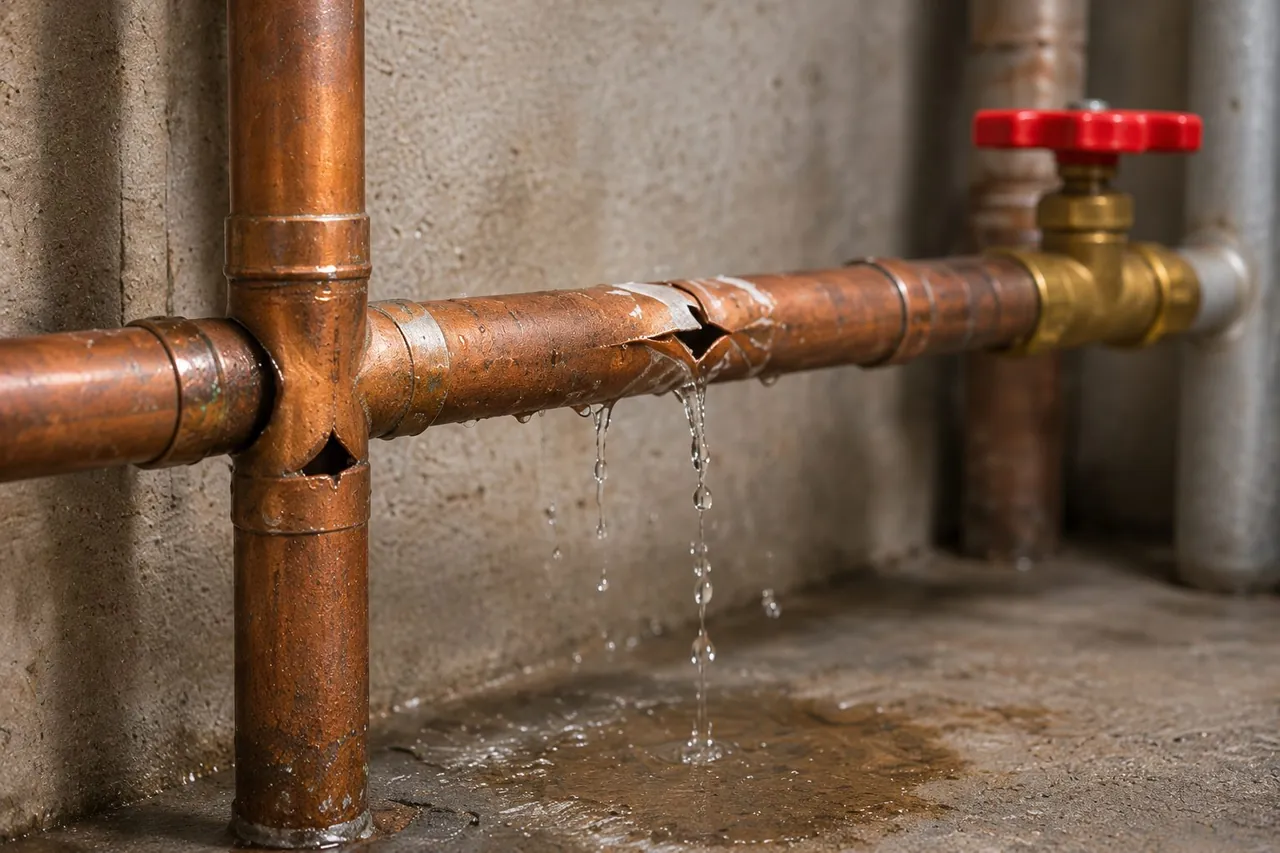
Alamosa Water Damage Restoration helps property owners evaluate water-related damage and plan appropriate drying and recovery work. Whether a pipe has burst in freezing weather, a fixture has overflowed, or a ceiling has become wet from a roof leak, we focus on finding the affected areas and explaining what can reasonably be dried, cleaned, repaired, or replaced.
Where to Request Water Damage Help
What Water Damage Restoration Can Involve
Every loss has its own circumstances. The following areas commonly need attention after water enters a building. The necessary work depends on the source, contamination level, exposure time, and condition of the materials.
Water Damage Assessment
Restoration begins with examining the known source of the water and identifying the rooms, surfaces, and building assemblies that may be affected. Visible damage gives useful clues, but moisture can move into adjacent materials or become trapped behind finished surfaces. An assessment helps establish priorities, identify safety concerns, and determine which materials need further evaluation. It also gives the property owner a clearer understanding of what restoration may involve.
Structural Drying
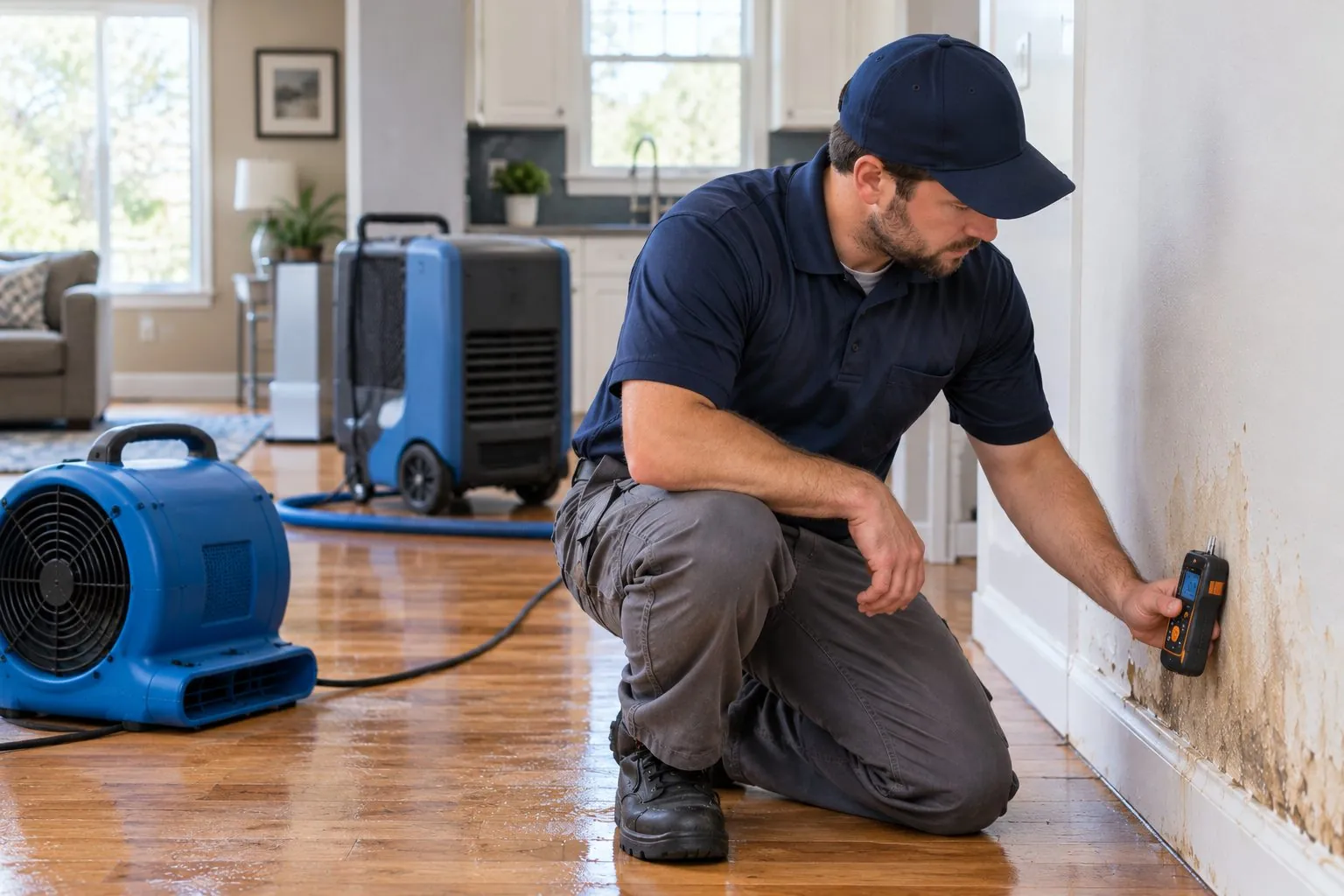
Wet structural materials may require controlled drying rather than simply allowing the room to air out. Depending on the conditions, drying methods can involve air movement, dehumidification, moisture checks, and access to concealed wet materials. The goal is to reach an appropriate moisture condition without causing avoidable additional damage. Material thickness, construction methods, temperature, and existing moisture levels all influence the plan.
Floor and Subfloor Damage
Water can move beneath vinyl, laminate, carpet, tile, and other finished flooring. Even when the top surface appears dry, padding, adhesives, underlayment, or subfloor materials may remain damp. Restoration decisions depend on the flooring type, installation method, water source, and length of exposure. Some materials can be dried, while others may need removal before the underlying structure can be evaluated properly.
Drywall and Ceiling Damage
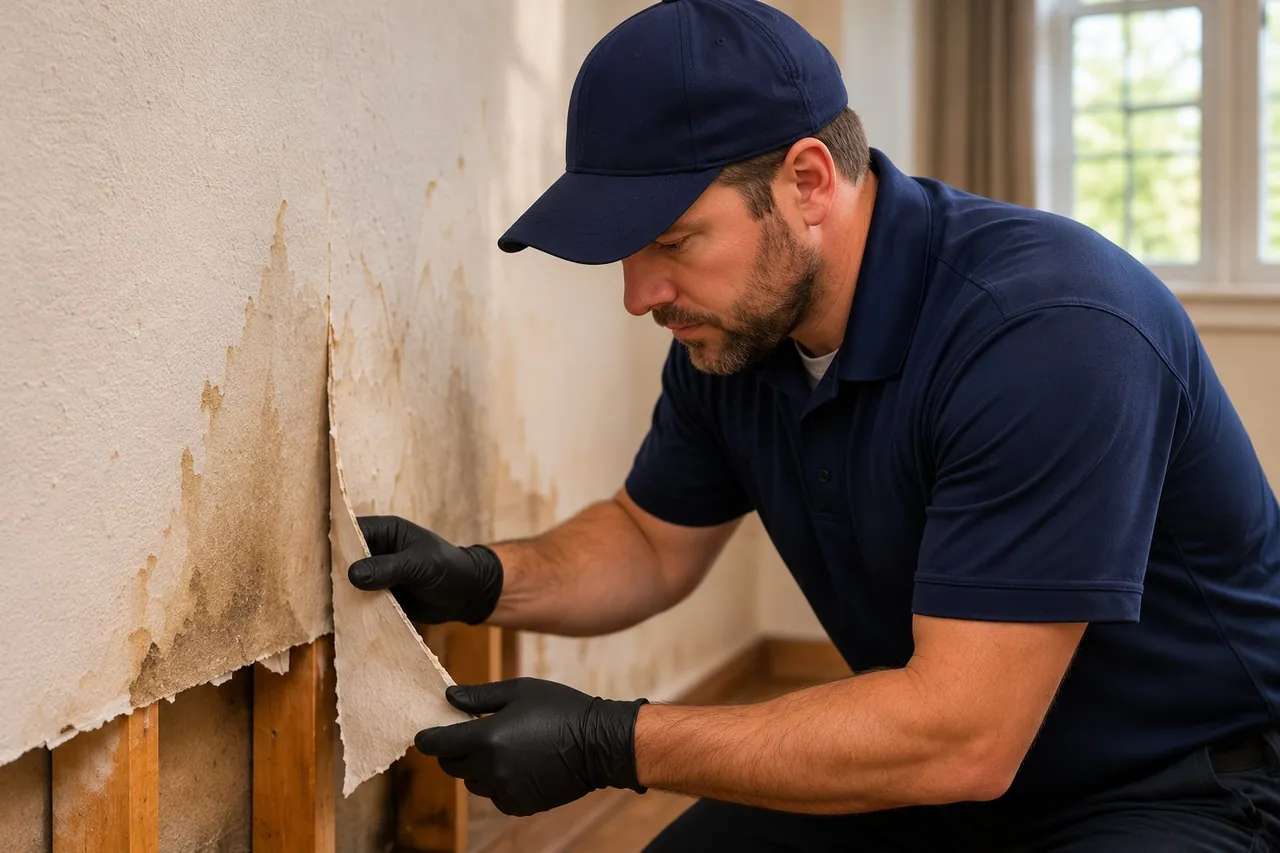
Drywall can absorb water from leaks, appliance failures, or water traveling between floors. Wet insulation and concealed framing may also be involved, particularly after a ceiling leak or water intrusion inside a wall. The affected material should be evaluated for moisture, deterioration, and contamination. Depending on its condition, selective removal may be necessary to allow safe drying and later repairs.
Cabinets and Interior Materials
Kitchen and bathroom leaks can affect cabinet bases, toe kicks, trim, and nearby walls. Manufactured wood products may swell or separate after prolonged water exposure, even if the original leak was relatively small. A careful assessment can distinguish surface damage from problems within the cabinet assembly or the floor beneath it. This helps property owners understand what may be salvageable and where repairs should be considered.
Post-Drying Recovery Planning
After moisture has been addressed, some properties still need finish repairs, material replacement, cleaning, or further evaluation. Drying the building and returning it to its previous appearance are not always the same stage of work. We believe those distinctions should be explained clearly. Customers should know which areas have been addressed, what remains to be done, and when another qualified trade may be needed for plumbing, electrical, roofing, or reconstruction work.
Why Choose Us for Water Damage Restoration?
Look beyond the surface
Water often reaches spaces that are not visible from the room. We make those possibilities part of the assessment.
Make material-specific decisions
Drywall, wood, insulation, and different flooring products respond differently to water. The restoration approach should reflect those differences.
Explain each stage
We distinguish assessment, water removal, structural drying, and repair planning so customers know what each stage is intended to accomplish.
Consider regional conditions
Cold-weather pipe failures and the variety of construction found around Alamosa are relevant to how water damage is investigated.
Water Damage Restoration Cost
These planning ranges combine a published Colorado contractor guide with an Alamosa cost model and an example from Pueblo. Compare the work included at each price.
- One-room clean-water cleanup and drying: $500–$1,500. This covers a small, quickly contained leak where extraction and drying are the main work.
- Several wet rooms or drywall repair: $1,500–$5,000. An online Alamosa model estimates about $2,250–$2,375 for a 215-square-foot repair example. A Pueblo contractor publishes $3,500–$6,400 for basement flood cleanup with deeper saturation.
- Extensive damage with demolition or rebuilding: $5,000–$20,000 or more. Ask which demolition, drying, and reconstruction line items are included. Contaminated water, longer equipment use, and work across multiple floors can raise the total.
Ask for an itemized estimate for the property. It should identify any dispatch charge, water removal, equipment days, moisture checks, material removal, and repairs. Tell the provider which rooms were affected and whether the water source is still active.
Published references. Colorado Springs restoration cost guide · Alamosa 215-square-foot cost model · Pueblo basement cleanup cost guide
The cost depends on how much of the building got wet, how long the moisture was present, whether the water was contaminated, and which materials can be dried in place. Standing water removal, equipment and monitoring, removal of damaged materials, and repairs can be separate line items.
Ask the provider for a written scope that identifies the affected rooms, includes any equipment rental or monitoring charges, and explains which repairs are included. If you plan to file an insurance claim, ask your insurer what records it needs and what your policy covers.
Helpful Cleanup Information
If water entered from outdoors, use the EPA guidance to plan a safe reentry and discuss contaminated materials with a provider.
Get Help With Water Damage
Get a clearer understanding of the water damage and the work your property may need.
Free — no obligations
Our Water Damage Restoration Approach
Understand the Water Incident
We begin with the source of the water, when the damage was discovered, and any immediate safety or access concerns.
Assess Affected Materials
We consider visible damage and possible concealed moisture to help identify the scope of work.
Plan Water Removal and Drying
The drying approach is based on the affected building materials, moisture conditions, and any contamination concerns.
Monitor and Reassess
Moisture conditions should be checked as drying progresses so the plan can be adjusted when necessary.
Discuss Remaining Recovery Needs
Once drying has been evaluated, remaining damage and possible repair or replacement requirements can be identified.